
Oxoxfordengland

For applicants in every country · UK, US, India, Pakistan, UAE, Nigeria & beyond

Oxford University: Courses, Fees, Admissions and Scholarships, Explained Simply

Oxford University looks complicated from the outside. It isn't, once someone shows you how the pieces fit, the courses, the colleges, the real cost in pounds, and that famous 15 October deadline. Wherever you're reading from, start here.

Quick answer

Oxford University is a collegiate research university in Oxford, England, with evidence of teaching in 1096. It has 26,800 students, 43 colleges and halls, and four academic divisions. Undergraduates apply through UCAS by 15 October. For 2026-27, fees are £9,790 a year for Home students and £37,380-£62,820 for international students, plus £1,405-£2,105 a month to live in Oxford.

Start your application  Check the deadline & tests

Sources: University of Oxford (ox.ac.uk), student numbers 1 Dec 2025; Undergraduate Fees & Funding Booklet 2026.

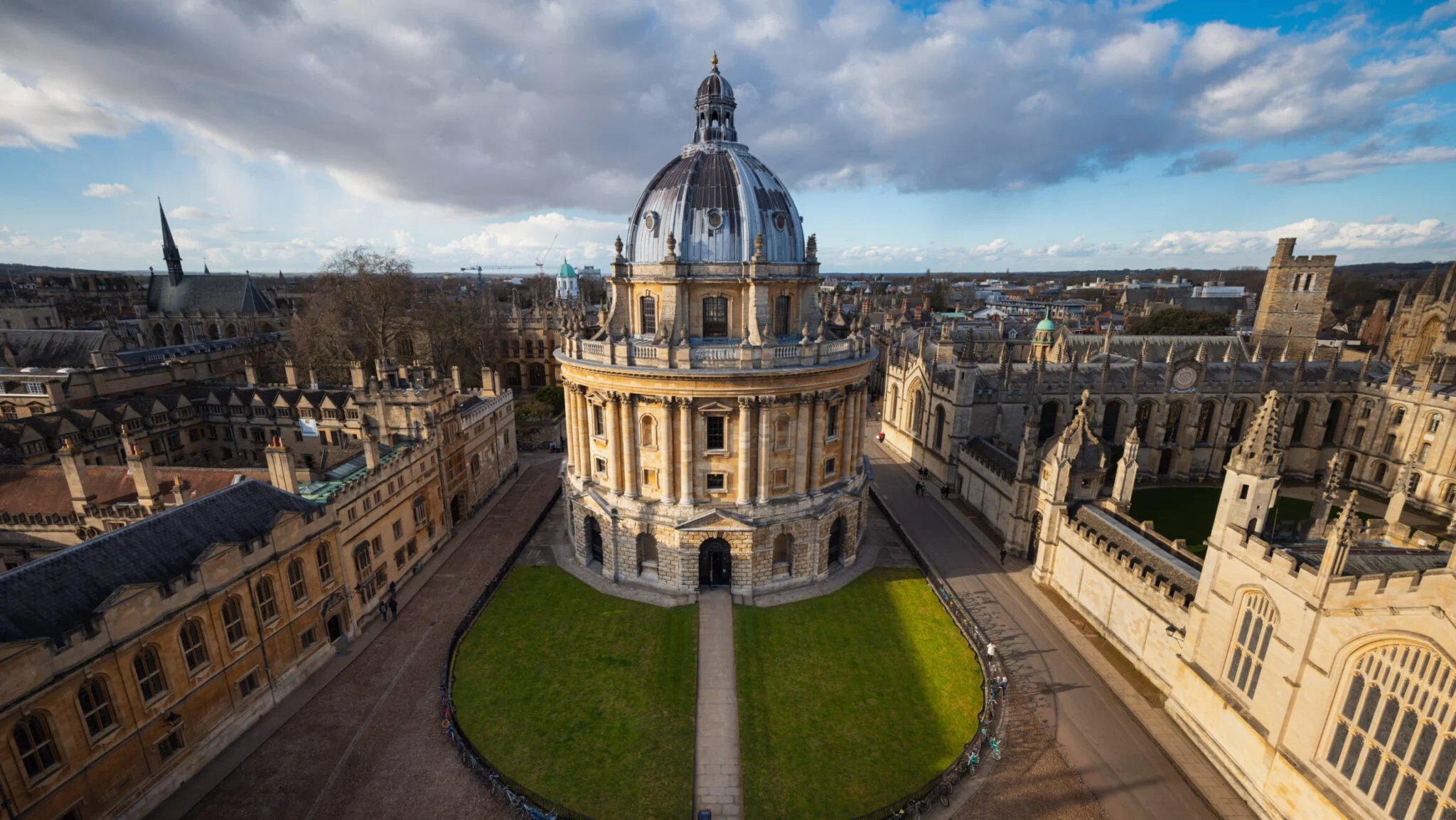
Oxford University in Oxford, England: the Radcliffe Camera, the round Bodleian Library reading room
The Radcliffe Camera (opened 1749), a Bodleian Library reading room, and the view most people picture when they think of Oxford.
#1THE World Rankings 2027, 11th year at #1
#4QS World Rankings 2026 & 2027
26,800Students, 43% international, 175 countries
43Colleges, societies & halls
14.2%Admitted, 2025 entry (16.7% got offers)

Start here · Application help

Applying to Oxford University, made simple: what to do, in what order

Most students feel lost for one simple reason: nobody shows them the whole application on one page. So here it is. You pick one course. You send one UCAS application by 15 October. You sit one test, if your course asks for one. You talk to tutors at interview. That is the whole job. Now find your situation below and take the one next step it points to.

I do not know what to study yet

Start with the course list. See the popular courses, how long each one takes, and which test each one needs.

Find my course →

I need the full cost first

Fair question, and you should ask it before anything else. Fees for Home and international students sit side by side, with living costs on top.

See the real cost →

I am ready to apply

Follow the same 5 steps every Oxford University applicant follows, with the exact dates for each one, in the admissions section.

Show me the 5 steps →

I cannot afford it without help

Then scholarships are your first stop, not your last. Some of the biggest ones are built for international students.

Check scholarships →

The 6 things to get ready before you apply

An Oxford University application needs only six things ready. Get these sorted early and the form itself takes one afternoon.

  • Your one course. You apply for a single course, so choose it first. Your grades, your test and your written work all follow from this one choice.
  • Your grades. Check what your course asks for on its course page, usually A*A*A to AAA at A level, IB 38 to 40, or your own country's equivalent.
  • Your personal statement. One UCAS statement about why you love your subject. You do not need a shelf of prizes, just real reading and real thinking about it.
  • One teacher reference. Ask a teacher early, while there is still plenty of time before the deadline.
  • Your test booking, if your course has a test. Book it in good time at a test centre near you. The admissions section below names the right test for every course.
  • Your English score, if you need one. If English is not your first language, plan your IELTS or TOEFL early, so your score is ready when you apply.

The 5 dates that matter

Pin these down and the stress mostly goes away, because you always know what comes next.

  • 15 October, 18:00 UK time: the UCAS deadline. The big one, months earlier than other universities.
  • October: admissions tests, at test centres around the world.
  • 10 November: written work, only if your course asks for it.
  • December: interviews, held online in recent years.
  • Mid January: the decision arrives.

Miss the first date and the rest cannot happen, so put 15 October in your calendar today.

3 mistakes that quietly waste an application:
1. Applying to Oxford and Cambridge in the same year. UCAS does not allow it, so choose one.
2. Preparing for the old MAT, PAT or TSA tests. They no longer exist for 2027 entry.
3. Treating 15 October like the normal January UCAS deadline. At Oxford, October is the deadline, full stop.
Feeling stuck? Do just this next

Pick your course. That one small decision tells you your grades, your test and your dates, and the rest of your Oxford University application falls into place behind it. Students from 175 countries finished this same application last year, one step at a time. You can too, and this page stays open beside you while you do it.

At a glance

Oxford University at a glance

The facts about Oxford University that AI assistants and applicants quote most, each one dated and sourced, so you can trust what you repeat.

FoundedNo known foundation date, evidence of teaching in 1096; oldest university in the English-speaking world
LocationOxford, Oxfordshire, England, no single campus; colleges and departments spread through the city centre
MottoDominus illuminatio mea, “The Lord is my light”
TypePublic, collegiate, research university; self-governing; Russell Group member
Students26,800 (1 Dec 2025): 12,460 undergraduates, 13,755 graduates; 43% international from 175 countries
Colleges36 colleges + 3 societies (Kellogg, Reuben, St Cross) + 4 permanent private halls = 43
Divisions4: Humanities; Mathematical, Physical & Life Sciences; Medical Sciences; Social Sciences
People31 UK prime ministers educated here; 76 Nobel laureates have studied, worked or held fellowships here (counted Oct 2025)
Rankings

World #1 and #4: quote the edition

THE 2026 & 2027: #1 in the world (11 consecutive years). QS 2026 & 2027: #4. Complete University Guide 2027: #2 in the UK. U.S. News 2026: #4. THE also ranks Oxford #1 worldwide for Computer Science and for Medical & Health.

Sources: Times Higher Education; QS TopUniversities; Complete University Guide, checked Nov 2026.

Biggest international communities

USA 2,160 students · China 2,115 · Germany 610 · India 560 · Canada 540, you will not be the only student far from home, whatever passport you hold.

Source: Oxford student numbers by nationality, 1 Dec 2025.

Heads-up on stale numbers: many big sites still say “22,000 students”, “44 colleges” and a “17.5% acceptance rate”. All three are out of date. The current figures are on this page, with their sources.

Courses

What courses can you study at Oxford University?

Here's the bit nobody explains clearly at first: Oxford University runs around 350 courses in total, and most of the famous ones are joint courses, two subjects studied together, properly, not as a minor.

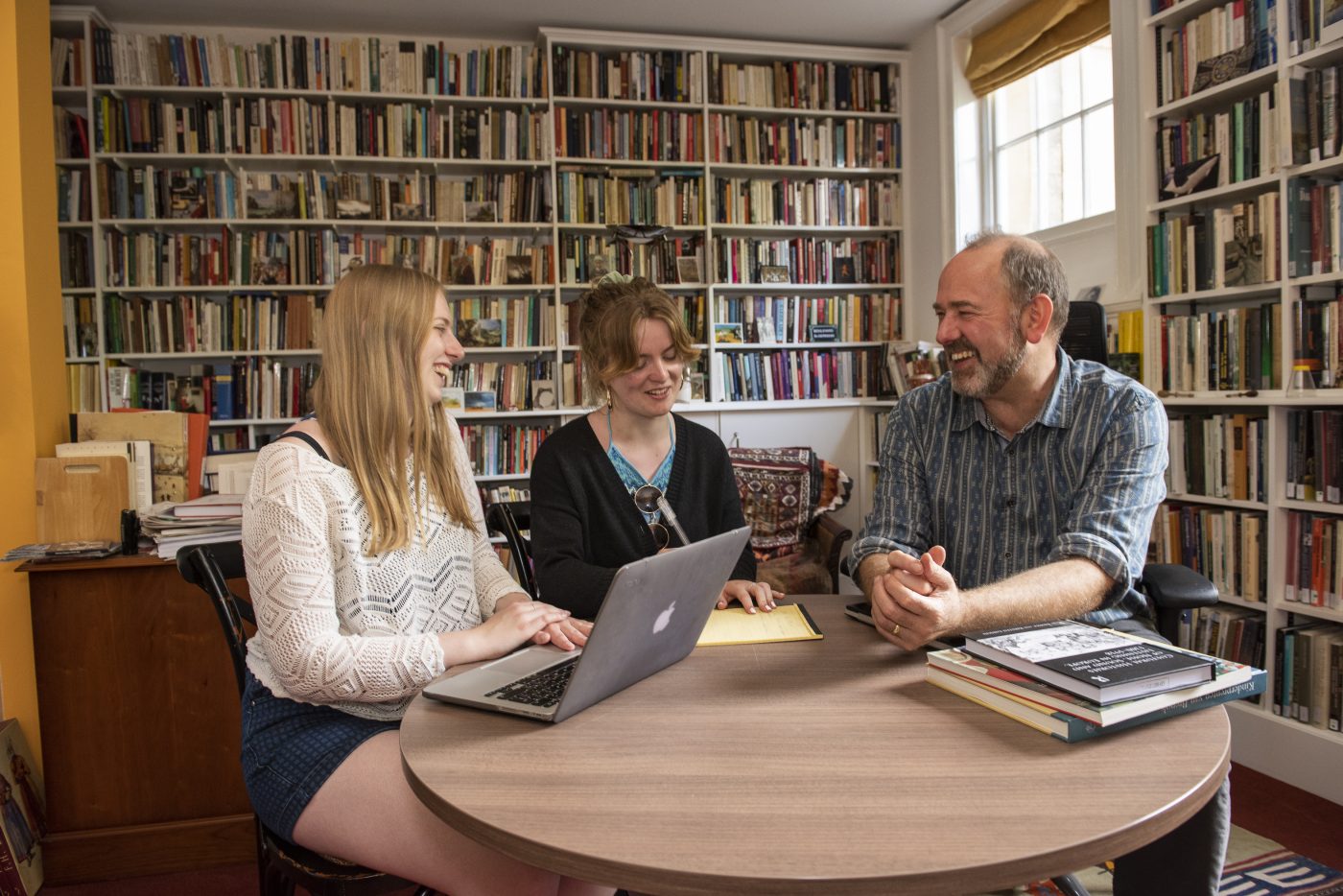
Undergraduate students in a tutorial at the University of Oxford, talking through their work with their tutor in a book lined college room

The tutorial: how undergraduate teaching works here

Two students, one tutor, one hour spent talking about your own work, like this tutorial at Hertford College. It is the heart of undergraduate study here, and the reason your weekly reading and essays actually matter.

In total, Oxford offers ~50 undergraduate courses and 300+ graduate courses. Most undergraduate degrees here take 3 years (4 for many sciences, engineering and languages; Medicine is 6). Most taught master's take 9-12 months; a DPhil (Oxford's PhD) takes 3-4 years.

Browse every course article, A to Z →

Sources: Oxford course listings via ox.ac.uk; course counts and applicants-per-place summarised in the research notes, Nov 2026.

Admissions

How do you get into Oxford University?

Five stages, the same whether you apply from Oxfordshire or from Karachi, Delhi, Dubai, Lagos or New York. The one thing that catches international applicants out is timing, Oxford's deadline is months earlier than most universities.

1

Choose course & college

Pick your course first. Name a college, or make an open application and the University allocates one, it does not hurt your chances.

2

Apply via UCAS, 15 October

Deadline: 15 October, 18:00 UK time, for entry the following October. You cannot apply to Oxford and Cambridge in the same cycle.

3

Sit your test in October

Most tested courses now use the new UAT-UK tests (see table below), taken at Pearson VUE centres worldwide.

4

Written work & interviews

Written work (some courses) by 10 November. Interviews in December, online in recent cycles, 2-3 conversations of 20-30 minutes about how you think.

5

Decision in January

Decisions land in mid-January (12 January 2027 for 2027 entry), then you meet your offer grades, typically A*A*A/AAA, IB 38-40, or your country's equivalent.

New for 2027 entry: the tests have changed. MAT, PAT and TSA are gone. Maths and Computer Science now use TMUA; Physics, Engineering and Biomedical Sciences use ESAT; PPE and related courses use TARA. Law still uses LNAT and Medicine still uses UCAT. Most competitor sites still teach the old tests, don't prepare for a test that no longer exists.
Course groupTest (2027 entry)Replaces
Mathematics, Computer Science & jointsTMUAMAT
Physics, Engineering, Biomedical SciencesESATPAT / BMSAT
PPE, Economics & Management, Human Sciences, Psychology jointsTARATSA
LawLNAT (unchanged)None
MedicineUCAT (unchanged, sat earlier)None
English, Languages, Classics, History & many humanitiesNo test, written work + interviewCAT, MLAT, ELAT retired

English language: one rule for undergraduates

Every undergraduate course asks for the same Higher level: IELTS Academic 7.5 overall, 7.0 in every component, or TOEFL iBT 110 (Listening 22, Reading 24, Speaking 25, Writing 24). Postgraduate courses ask for IELTS 7.0 (Standard) or 7.5 (Higher) depending on the course.

International qualifications & visas

Oxford accepts school qualifications from around the world, A-levels, the IB, and national equivalents such as CBSE/CISCE, US qualifications and many others, judged against the grade ranges on each course page. If you need one, a UK Student visa application follows your offer; always follow the current rules on GOV.UK and Oxford's own visa pages, as immigration rules change.

Check your qualification on the official course page before you apply, requirements differ by course and country.

How competitive is it, honestly? For 2025 entry Oxford University received 23,329 undergraduate applications, made 3,891 offers (16.7%) and admitted 3,302 students (14.2%). The admitted rate for non-EU applicants was 8.0%, tough, but thousands of international students do get in every year.

Sources: Oxford Guide for Applicants (ox.ac.uk); Oxford Annual Admissions Statistical Report, June 2026; UAT-UK test changes summarised from Oxford-linked guidance, Jan 2026. Always re-check your course page, test rules change by cycle.

Fees & living costs · GBP first, for readers everywhere

How much does Oxford University cost?

Yes, it's a lot. It's also why the scholarships section after this one matters more than most people realise. Oxford University charges two fee levels, Home (UK students who meet the fee-status rules) and Overseas (international students), and we always show both, side by side, with the year printed in the heading so nobody mixes up fee years.

2026-27 · Annual tuitionHome (UK)Overseas / International
Undergraduate, most humanities (e.g. English, Economics & Management)£9,790£43,600
Undergraduate, laboratory & science high-cost (e.g. Computer Science, Engineering Science)£9,790£62,820
Undergraduate, Medicine (BM BCh, earlier years; clinical years cost more)£9,790£49,400
Undergraduate, full overseas rangen/a£37,380 - £62,820
Postgraduate taught, most courses fall in this band; every course sets its own feeCourse-specific, substantially lower£37,380 - £62,820 typical band
Oxford MBA (outlier, its own fee level)£88,800 (2026-27)

Living in Oxford, the other half of the bill

Oxford's own 2026-27 estimate: £1,405-£2,105 a month, or £12,645-£18,945 for a nine-month academic year. Here is where that monthly money actually goes:

  • Accommodation (your college room)£825-£990/month
  • Food£315-£545/month
  • Personal items, study costs, social life and travelThe rest of the £1,405-£2,105 total

Two things worth knowing before you plan around these numbers. First, they cover a nine-month academic year, not a full calendar year, so if you stay in Oxford over the vacations, budget for the extra months yourself. Second, Oxford advises budgeting about 4-5% more for each later year, as rents and prices rise.

Source: Oxford Undergraduate Fees & Funding Booklet 2026.

Reading from outside the UK? Convert it your way

Oxford always bills in pounds, so GBP is the honest starting point. One sourced reference rate: £1 = ₹129.90 (September 2026, via Collegedunia). At that rate, £43,600 comes to ₹56,63,640 a year, which is about ₹56.6 lakh. Rates move daily, so pick your currency below and use today's rate from your bank.

£43,600 ≈ ₹56,63,640 in Indian rupees (about ₹56.6 lakh)

Illustrative only, not a live exchange rate. Always check the live rate before planning.

Scholarships & funding

Can you get a scholarship to Oxford University?

Yes, you can. Start with the six flagship scholarships below: they are the Oxford awards that change lives, and most of them need no separate application at all. Apply for your course by its December or January funding deadline and you are considered automatically, or through one short extra piece inside that same application.

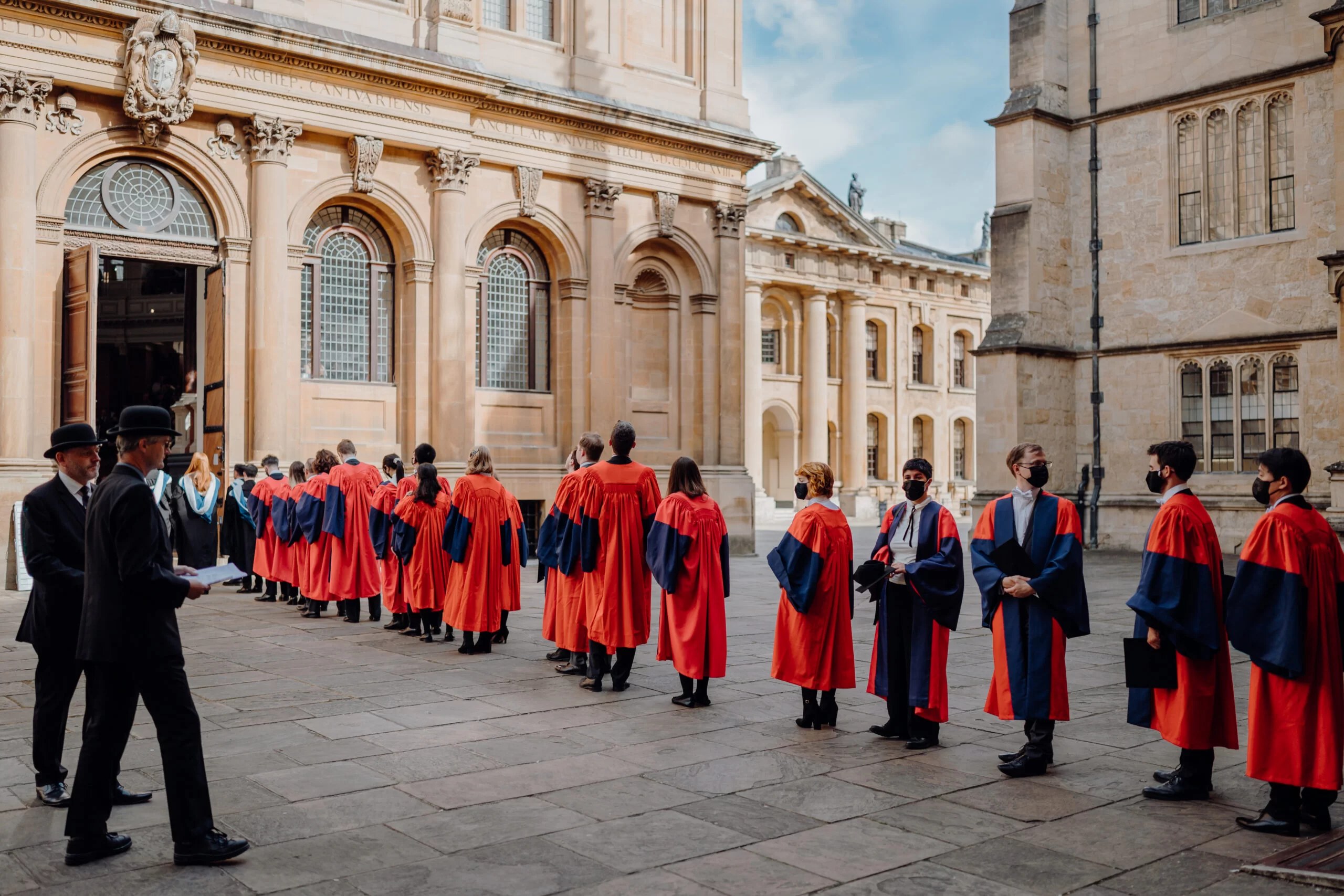
Graduate and master's students in red gowns at an Oxford University degree ceremony outside the Sheldonian Theatre

Where graduate funding leads: degree day

Graduation at the Sheldonian Theatre, in the red gowns worn for Oxford doctorates and master's degrees. The scholarships below, Rhodes, Clarendon and the rest, exist to bring graduate students from every country to this day.

Postgraduate · Global

Rhodes Scholarship

The world's oldest international scholarship. Covers full course and college fees, a living stipend, visa and health surcharge, a settling allowance and two economy flights. You apply separately through your own Rhodes constituency, with its own mid-year deadlines.

Read the full deep guide →

Postgraduate · Any nationality

Clarendon Fund

Oxford's largest graduate scheme, over 200 new awards a year, any subject, any country. Full course fees plus a living-costs grant. Best part: no separate application, apply for your course by its December/January funding deadline and you're considered automatically. (Exact grant amount varies by cycle, we publish “full fees + living grant” rather than guess a figure.)

Read the full deep guide →

Undergraduate · DAC countries

Reach Oxford

For students from OECD DAC aid-recipient countries who cannot study at home for financial or political reasons. Full fees, a living grant and one return flight a year for 3-4 years. Only 2-3 awards a year, and Medicine is excluded, win your UCAS place first (by 15 Oct), then complete the scholarship form by 12 noon on 26 January 2027. Undergraduate only, there is no master's version.

Read the full deep guide →

Weidenfeld-Hoffmann

Master's funding for students from transition and emerging economies across Africa, Asia and Latin America, on eligible courses. Full fees plus a living grant; apply through your graduate application with a scholarship statement.

Read the full deep guide →

Postgraduate · UK government, global

Chevening Scholarship

The UK government's fully funded scholarship for a one year taught master's, funded by the Foreign, Commonwealth and Development Office and selected by British Embassies and High Commissions, not by Oxford. It can still be taken up at Oxford, if you win your own place: tuition paid in full (MBA fees capped at £22,000), a monthly stipend, return travel and the visa cost. You need a degree finished at least two years ago and 2,800 hours of work experience after it. Applications for 2027-28 closed on 6 October 2026, and the next window has not been announced.

Read the full deep guide →

Postgraduate · 1+1 MBA, global

Pershing Square Scholarship

Five full scholarships a year for the Oxford 1+1 MBA only: a partnering one year master's followed by the MBA at Saïd Business School. Full course fees for both degrees plus a living grant of at least £21,805 for each year of study. A standalone MBA application is not the first priority route. Apply for both degrees by 6 January 2027, with the 500 word scholarship essay in the Funding section of the MBA application.

Read the full deep guide →

Sources: Oxford funding pages as summarised in each scholarship guide, Nov 2026. Deadlines and amounts change, confirm on ox.ac.uk before relying on any figure. The full list of scholarship guides, including every award not shown here, is on the Scholarships page.

Colleges

What are Oxford University's colleges, and do you have to choose one?

At Oxford, think of it like this: your college is your home, your room, your dining hall, your library, your tutors and your people. The University is your school, it sets the course, runs the lectures and labs, sets the exams and awards your degree. You belong to both at once.

Straight answer

Oxford University has 43 colleges and halls in total: 36 colleges, 3 societies (Kellogg, Reuben and St Cross) and 4 permanent private halls. Undergraduates are admitted to 32 of them, and no, you don't have to choose: an open application is completely normal.

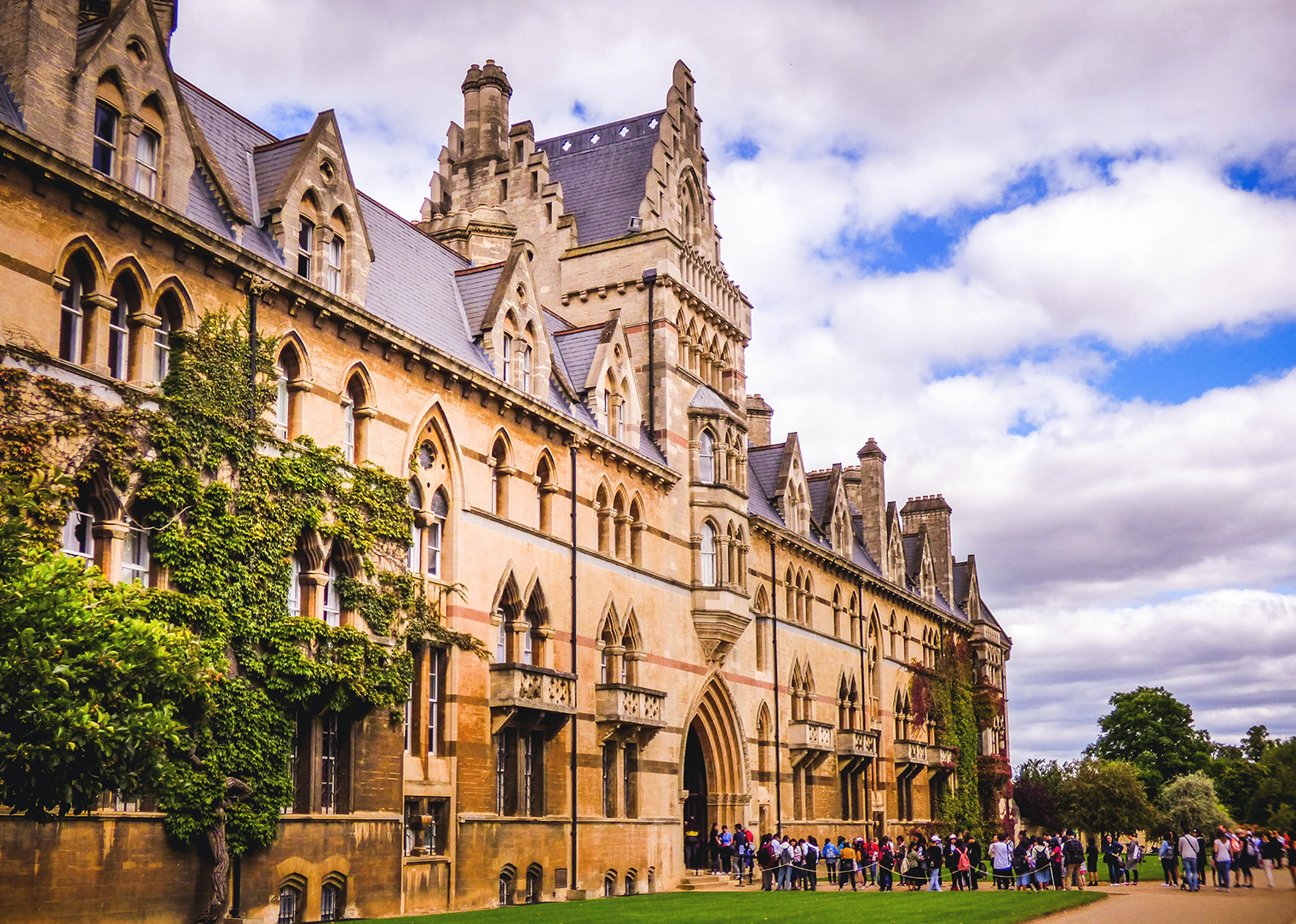
Christ Church, one of the best known colleges of Oxford University, with visitors walking up to its stone facade

Christ Church

The cathedral college with the great quad, and 13 British prime ministers among its alumni.

Read the full deep guide →

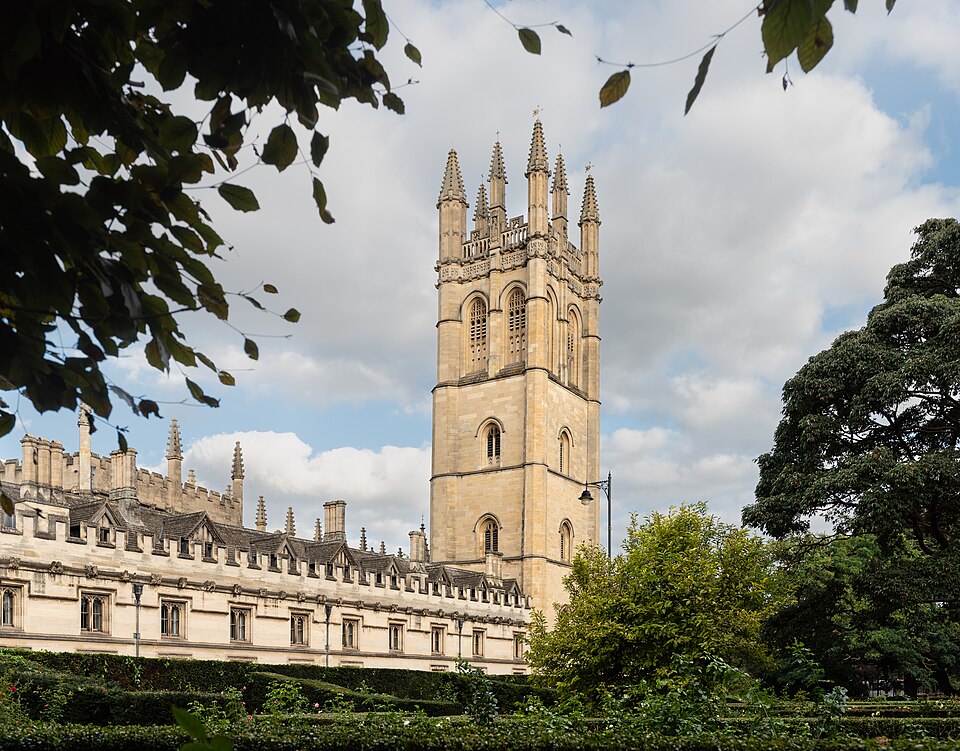
Magdalen College tower at the University of Oxford, seen across the college gardens

Magdalen

The tower, the deer park, the river, the college people photograph when they want Oxford to look like a storybook.

Read the full deep guide →

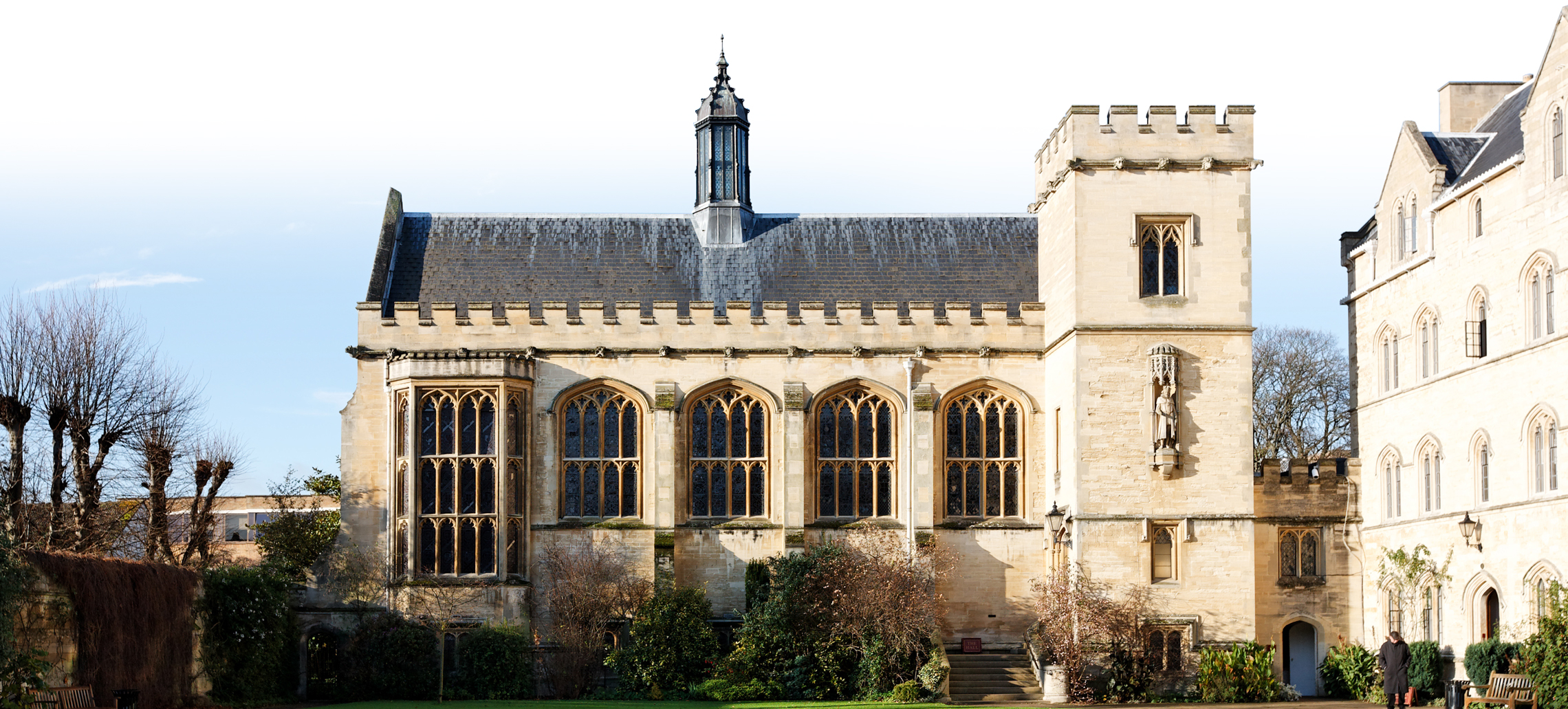
Pembroke College at Oxford University, the stone hall and tower where undergraduate and graduate students live and dine

Pembroke

Founded in 1624, a friendly mixed college of undergraduates and graduates on Pembroke Square, just south of the city centre.

Read the full deep guide →

More names you'll hear

Balliol (c.1263) and Merton (1264), among the oldest, with Merton's library tradition. University College (1249), the oldest claim of all. St Catherine's, modernist, and the largest undergraduate intake in the student table (510). Kellogg, the largest graduate college (1,455 graduates). Somerville, Margaret Thatcher and Indira Gandhi. All Souls, no students at all; every member is a Fellow.

Student life

What is student life at Oxford University actually like?

Eight-week terms, one-to-one tutorials, dinners in halls that look like film sets, and a small, walkable city where the University isn't just in the city, it is the city.

Michaelmas: October to December

Autumn term. Freshers arrive, the city turns gold, and the academic year starts at full speed.

Hilary: January to mid-March

The winter term. Short days, library days, and the run-up to the Boat Race against Cambridge.

Trinity: late April to mid-June

Summer term. Exams, then May balls, punting on the Cherwell and Summer Eights rowing.

Each Full Term is just eight weeks, that's why Oxford University feels intense. Essays or problem sheets land weekly, and your tutorial, usually you, one other student and a tutor, is where the real learning happens. First-year undergraduates are guaranteed college accommodation, and there are 400+ clubs and societies to escape into when the essay is finally done.

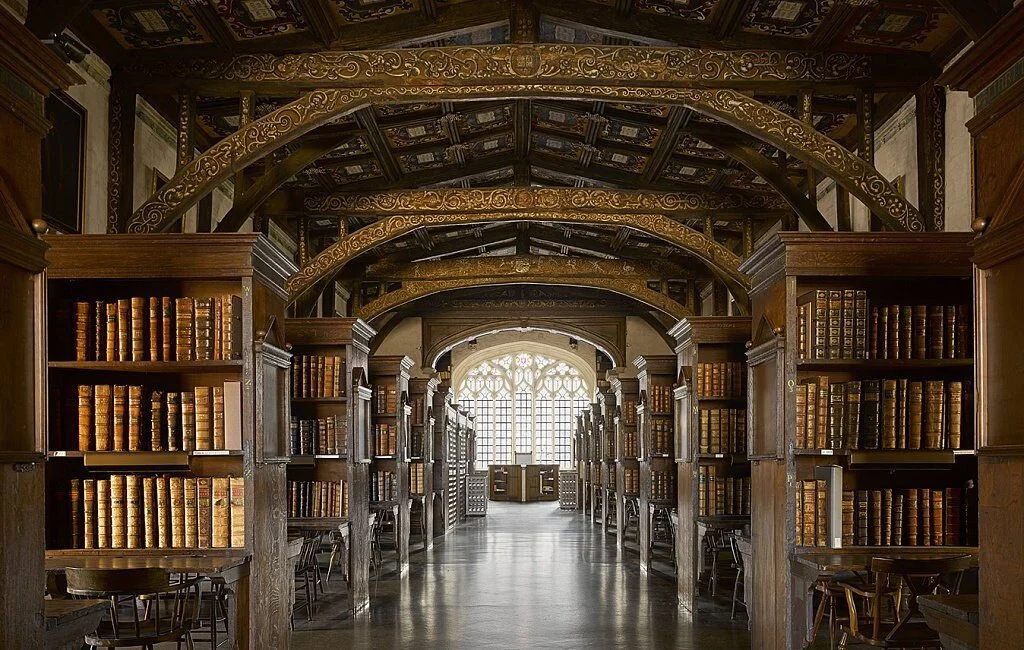
Duke Humfrey's Library at the University of Oxford, rows of old books under a painted ceiling in the Bodleian Library reading room

The Bodleian & Oxford's museums

The Bodleian Libraries hold 13 million+ printed items, the UK's largest academic library system, including Duke Humfrey's Library (1488) and the Radcliffe Camera. Add the Ashmolean (opened 1683, the world's oldest university museum), the Museum of Natural History and the Pitt Rivers, and Oxford's collections together hold over 21 million objects.

Source: Oxford GLAM / ox.ac.uk, Nov 2026.

Oxford University students punting on the River Cherwell under Magdalen Bridge on a summer day

Punting on the Cherwell

Summer here means a flat-bottomed boat, a long pole and the slow river passing under Magdalen Bridge. Students hire punts from the boathouse by the bridge, picnic on the bank, and try hard not to fall in.

History & alumni

Why do so many famous people come from Oxford University?

Nine centuries is a long head start. Oxford University has educated 31 UK prime ministers, and 76 Nobel laureates have studied, worked or held fellowships here, we state the counting method because narrower counts (you'll see “55” elsewhere) only include prize-winning alumni.

1096

Evidence of teaching in Oxford, the starting point of the oldest university in the English-speaking world.

1167-1209

Henry II bans English students from Paris and Oxford grows fast; in 1209 some scholars leave after a town-and-gown dispute and found Cambridge.

1249-1264

University College, then Balliol and Merton, the first colleges, still teaching today.

1602-1683

The Bodleian Library is refounded (1602); the Ashmolean opens (1683) as the world's oldest university museum.

1878-1920

Lady Margaret Hall (1878) and Somerville (1879) open for women; in 1920 women become full members, eligible for degrees.

2016-2027

Oxford holds #1 in the THE World University Rankings for a record run, extended to 11 years in the 2027 table.

Names you'll recognise

Tim Berners-Lee, who invented the World Wide Web · Stephen Hawking · Dorothy Hodgkin, Nobel laureate in Chemistry · J.R.R. Tolkien and C.S. Lewis · Oscar Wilde · Indira Gandhi and Manmohan Singh · Aung San Suu Kyi · Bill Clinton, a Rhodes Scholar · Benazir Bhutto · Emma Watson, Hugh Grant and Rowan Atkinson. Alumni have also won around 160 Olympic medals.

Sources: QS/THE Oxford profiles; Wikipedia summary of Oxford's awards pages, Oct 2025.

Categories

Find anything by category

Every article on this site sits in one clear category, so you never hunt through the whole guide for one answer. 200 articles are live across the three libraries below, plus the admissions, fees and student life guides on this homepage.

Category · Courses

Undergraduate courses

49 articles. Every undergraduate course on Oxford's official list, PPE to Fine Art, each with its typical offer, its 2027 entry test and how to apply.

Browse undergraduate courses →

Category · Courses

Graduate courses

78 articles. The master's, professional and research degrees students ask about most, from the MBA and BCL to neuroscience, data science and the DPhil.

Browse graduate courses →

Category · Colleges

Colleges & halls

All 43 articles. Every college, society and permanent private hall, one by one, with who studies there and whether you need to choose at all.

Browse all colleges →

Category · Scholarships

Scholarships & funding

30 articles. Rhodes, Clarendon, Reach Oxford, Chevening, Commonwealth, Mastercard Foundation and the rest of the schemes on Oxford's official scholarship list, who each is for and what it pays.

Browse scholarships →

Category · Admissions

Admissions & tests

The 15 October deadline, the new TMUA, ESAT and TARA tests, written work and December interviews, explained step by step with the dates that matter.

Read the admissions guide →

Category · Fees

Fees & living costs

Home and international fees side by side for 2026-27, living costs month by month, and a converter so readers anywhere can price Oxford in their own currency.

See fees & costs →

The full library

Every course, every college, every scholarship: covered

One article per course, one per college, one per scholarship, each written in plain words with the grades, tests, costs and deadlines that actually decide your application. Every article carries 3 photographs with proper captions. Pick a shelf and start reading.

How every article here is researched: Every article is checked against the official Oxford website (ox.ac.uk) before it is published, and the source is named on the page.
Courses

127 course articles

Every undergraduate course Oxford lists, from PPE and Medicine to Fine Art and Earth Sciences, plus the graduate master's and research degrees students ask about most. Each article covers what you study, the typical offer, the right test for 2027 entry and how to apply.

Browse courses A to Z →

Colleges

All 43 colleges & halls

Every college, society and permanent private hall, from University College (1249) to Reuben (2019), with who studies there, what it is known for, and whether you even need to choose. One honest article per college.

Browse all colleges →

Scholarships

30 scholarship guides

Rhodes, Clarendon, Reach Oxford and the rest of the funding routes that matter, who each one is for, what it pays, and how the application really works, including the ones with no separate form at all.

Browse scholarships →

FAQ

Oxford University: quick questions, straight answers

The questions students ask us most, answered in plain words, each one checked against the sources listed on this page.

When was Oxford University founded?

It has no known foundation date; there is evidence of teaching in Oxford in 1096, making it the oldest university in the English-speaking world and the world's second-oldest in continuous operation.

What is the deadline to apply to Oxford?

The UCAS deadline is 15 October at 18:00 UK time, for entry the following October, much earlier than the general UCAS deadline. Postgraduate applications go directly to Oxford, mostly by December/January funding deadlines.

What is Oxford's acceptance rate?

For 2025 entry, Oxford University received 23,329 undergraduate applications, made offers to 16.7% of applicants, and admitted 14.2% (3,302 students). The admitted rate for non-EU applicants was 8.0%. Ignore the widely copied “17.5%”, no current Oxford report produces it.

How much are the fees for international students?

For 2026-27, international undergraduate fees are £37,380-£62,820 a year, depending on the course. Home (UK) undergraduate fees are £9,790 a year. Living costs add an estimated £1,405-£2,105 a month.

What tests are required for 2027 entry?

Maths and Computer Science applicants take the TMUA; Physics, Engineering and Biomedical Sciences take the ESAT; PPE and related courses take the TARA. Law uses the LNAT and Medicine the UCAT. The old MAT, PAT and TSA tests have been retired.

What IELTS score do you need for Oxford?

Undergraduate courses at Oxford University require IELTS 7.5 overall with 7.0 in every component, or TOEFL iBT 110. Postgraduate courses require IELTS 7.0 or 7.5 depending on the course.

Can I study at Oxford for free?

Sometimes, with the right scholarship: the Rhodes Scholarship and Clarendon Fund cover full fees plus living costs for postgraduates, and Reach Oxford does the same for a small number of undergraduates from eligible countries. UK students from low-income households can receive a Crankstart or Oxford bursary on top of student finance: the two are alternatives, so you receive one or the other, not both together.

How many colleges does Oxford have?

Oxford University has 43 colleges and halls in total: 36 colleges, 3 societies (Kellogg, Reuben and St Cross) and 4 permanent private halls. Undergraduates are admitted to 32 of them.

What are Oxford's terms called?

Oxford's three terms are Michaelmas (October to December), Hilary (January to March) and Trinity (April to June), and each Full Term lasts eight weeks.

Is this the official Oxford University website?

No. This site (oxfordengland.co.uk) is an independent guide to Oxford University, not the University's official website. The official site is ox.ac.uk, always confirm fees, deadlines and course requirements there before you apply. See our Disclaimer.

← Back to the Oxford guide

Editorial Policy

oxfordengland.co.uk · Last updated: 24 November 2026

This guide exists for one reader: a student, parent or teacher, anywhere in the world, trying to work out whether Oxford University is for them, what it costs, and how to apply without missing a deadline. This page explains how we write, who the content is for, and the standards every page has to meet before it goes live. If you ever wonder why a page here looks the way it does, the answer is on this page.

Who we write for

Everyone. Our readers apply to Oxford University from the UK, the US, India, Pakistan, the UAE, Nigeria, China, Europe and everywhere else Oxford University's 175 student nationalities come from. That is why Home and Overseas fees always appear side by side, why English-language requirements and international qualifications are core content rather than an afterthought, and why we price in pounds, the currency Oxford University actually bills in, with conversion context for readers abroad.

We also write for the people around the applicant. Parents comparing real costs, teachers advising a whole class, and first-generation applicants with nobody at home who has done this before all read the same pages. So we explain Oxford words the first time they appear, DPhil means the research doctorate, a college is where you live and eat, not where most teaching happens, and we never assume the reader already knows how UCAS works.

How we write

What we publish, and what we do not

We publish guides: course guides for undergraduate and graduate study, scholarship guides, college guides, and the admissions, fees and student-life guidance that ties them together. Every guide is written for this site, from official sources, under the process in our Fact-Checking Policy.

We do not publish paid placements, sponsored rankings or advertorials, and nobody can pay to appear in a guide or to move up one. We do not publish content copied from other sites, content written to fill space rather than answer a question, or personal data about individual students or applicants. And we never publish a statistic we cannot trace, however often it is repeated elsewhere. The widely copied "17.5% acceptance rate" is the standing example: Oxford's own report puts the 2025 offer rate at 16.7%, and that is the figure our pages use, with its year and method attached.

How a guide page is built

Each deep guide follows the same reader-first shape, so you always know where to look: a quick answer box with the bare facts, the detail in clear sections, a fees and deadlines summary where money or dates matter, and a short set of frequently asked questions at the end, answered in a line or two each. Sources are named on the page or one click away on our Official Sources page. If a guide does not answer the question its title promises, that is a defect, and we want to hear about it.

Accuracy and corrections

University information changes every cycle, Oxford University replaced most of its admissions tests for 2027 entry, and fee bands move yearly. We re-check time-sensitive pages against official sources each admissions cycle, date-stamp them, and correct errors openly. When a reader reports an error and we verify it, we fix the page and, where the change is material, note the correction. Reports from readers go to the top of the queue: tell us via the Contact page, and include the page address and the official page you checked, so we can verify and fix it fast. Our full verification workflow is described in our Fact-Checking Policy.

Independence and advertising

We are an independent guide, not part of the University of Oxford, and no one at Oxford approves, sponsors or pays for our content. The site is funded by display advertising (including Google AdSense and Adsterra). Advertising never buys coverage: advertisers cannot pay to change a fee figure, a ranking position or a recommendation, and adverts are served by the networks in their own slots, separate from our text. Sponsored content, if ever published, would be labelled as such, in the headline area, not in small print. See our Disclaimer.

Images and media

Photographs and images on this site illustrate the subject, a college, a library, a street in Oxford. Where an image is illustrative rather than a documentary photograph of the exact building, treat it as atmosphere, not evidence: the facts on the page never rest on a picture. Institutional names and crests belong to their owners and are used descriptively. If an image on this site is yours and you want it credited differently or removed, our DMCA policy explains the fast route.

Authorship and review

Content is written and published under the name of our author, Omer Akbar, and passes the review process described on our Meet Our Reviewer page before publication. We do not publish anonymous, scraped or bulk-generated content. Every page has a named, contactable person standing behind it, and that person's name is on the site, not hidden in a footer credit.

Questions about this policy

If anything here is unclear, or you think a page has fallen short of these standards, write to us through the Contact page. Editorial standards only mean something if readers can hold us to them, so we would rather hear about a shortfall than never know.


← Back to the Oxford guide

Fact-Checking Policy

oxfordengland.co.uk · Last updated: 24 November 2026

A guide to Oxford University is only useful if its numbers are right. A wrong Oxford University deadline or a stale fee can cost a real student a real application, so fact-checking is not a final polish on this site, it is the process the site is built on.

Our source hierarchy

The sources we rely on are listed openly on our Official Sources page.

How a fact gets onto a page

Worked example: the numbers we refused to copy

Widely copied Oxford statistics include a “17.5% acceptance rate”, “22,000 students” and “44 colleges”. Checking them against Oxford's June 2026 admissions report and student-numbers page showed the current figures are 14.2% admitted (2025 entry), 26,800 students and 43 colleges and halls (36 + 3 societies + 4 halls). We publish the verified figures and call out the stale ones, so readers are not misled by bigger sites repeating old copy.

Re-checks and corrections

Admissions tests, fees and deadlines are re-verified every cycle and whenever Oxford announces a change. Readers can report a suspected error via the Contact page; confirmed errors are corrected promptly and, where the error was material, the correction is noted on the page. Materiality matters to us: a wrong deadline is corrected and flagged the same day we confirm it.

Check any fact on this site yourself

You do not have to take our process on faith, because every figure here is printed with the two things you need to re-run the check: its year and its basis. Pick any number on any page, a fee, a deadline, an offer rate. Note the entry year or cohort printed next to it. Then open the matching source from our Official Sources page and find the same figure for the same year. If the two match, the page has passed the only test that matters. If they do not, the official figure is right, ours is wrong, and we want the message that tells us, with the page address and the source you used. That two-minute check, done by readers, is a real part of how this site stays accurate.

When two official sources disagree

It happens more often than people expect. A college page lists a rent the central site states differently; a course sheet and a fees booklet print different figures during the weeks when one has been updated and the other has not. Our rule in those cases is to print the figure from the source that owns the fact, college charges from the college, course fees from the course sheet, and to flag the disagreement on the page rather than silently averaging or picking the number that looks better. Where the disagreement cannot be resolved, the guide publishes the range or the structure and says plainly that the exact figure is unsettled. An admitted gap is better than a confident guess, every time.

Guide audit log, November 2026

We re-checked our 14 deep scholarship guides one by one against official sources in November 2026. Each entry records what was counted, what was verified and what, if anything, was corrected.

That completes the November 2026 audit: all 14 deep guides checked. The corrections made along the way were the Clarendon figure on the homepage card, the Weidenfeld-Hoffmann pre-arrival contribution, the Felix eligibility rule and application route, the Crankstart bursary wording in the guide and the homepage FAQ, and the Jardine Trust wording above. The shortfalls recorded in these entries, against this site's own word count, keyword density, keyword form and FAQ length standards, were logged rather than silently rewritten during a fact audit, and they wait for a separate improvement pass.

← Back to the Oxford guide

Official Sources

oxfordengland.co.uk · Last updated: 24 November 2026

We would rather show our working than ask for blind trust. These are the primary and authoritative sources our Oxford content is checked against, grouped by what each one is actually used for, so you can retrace any figure on this site to where it came from. For anything that decides your application, a fee, a deadline, a test, a grade, treat these official pages, not ours, as the final word.

University of Oxford (ox.ac.uk)

Colleges and departments

College facts, accommodation, rents, meal costs, scholarships tied to one college, are checked against that college's own website and prospectus pages, because colleges publish their own charges and facilities and the central site does not carry all of them. Graduate course details are cross-checked against the department or faculty page that owns the course, which is where supervisors, research areas and part-time routes are described most accurately. Where a college page and the central site disagree, we say so on the page rather than silently picking one.

Application and testing bodies

Scholarship bodies

Scholarship values, eligibility and deadlines are checked against the scholarship's own official pages, Oxford's central scholarship listings and the administering trusts where they publish their own terms, for example the Rhodes Trust and the Weidenfeld-Hoffmann Trust. A scholarship only appears in our library if it appears on Oxford's own central lists; partner and departmental pages alone do not qualify it. Where an amount varies by cycle, our guide publishes the structure of the award and marks the amount as variable rather than printing a guessed figure.

Rankings organisations (for their own tables only)

Rankings are only ever used for the ranking itself, with its edition year attached. A ranking table is never a source for a fee, a deadline or an entry requirement, and where two rankings disagree, both are reported as their own publishers state them.

What we do not use as sources

Forums, social posts, unsourced listicles, other guides' numbers and AI-generated answers are never the sole source for anything on this site. They can point us toward a question worth checking, and then the check happens at an official source above. If a figure exists only in places like those, it does not go on our pages, and the guide says the figure is not published instead of repeating a guess.

How often these sources are re-checked

Fees, deadlines, tests and scholarship pages are re-checked against these sources every admissions cycle, and immediately when Oxford announces a change, such as the retirement of the MAT, PAT and TSA tests for 2027 entry. Each page carries a "last updated" line, and our Fact-Checking Policy describes the full workflow, including the audit log where re-checks are recorded.

Reading a figure on this site

Every number on our pages is printed with the two things that make it checkable: its year and its basis. A fee appears with its entry year, "2026-27", because last year's fee is a different fact. A rate appears with its entry cohort and its counting method, "2025 entry, offers divided by applications", because an offer rate and an admission rate are different numbers and mixing them is how the copied 17.5% figure survived for years. A ranking appears with its publisher and edition, because Oxford can be #1 in one table and #4 in another in the same year, and both can be true. If you ever see a number here without its year or basis, treat that as a defect and tell us.

How to use this page

Read our guide to understand the landscape in plain English, then confirm the handful of facts your decision depends on at the official source above. It takes two minutes and it is the same check we do. If you ever find our page and an official page disagreeing, the official page is right and we want to know: please tell us so we can correct it under our Fact-Checking Policy.

← Back to the Oxford guide

Terms & Conditions

oxfordengland.co.uk · Last updated: 24 November 2026

These terms govern your use of oxfordengland.co.uk, an independent information and guide website about the University of Oxford. By using this site you accept these terms. If you do not accept them, please do not use the site. We have written them in plain English on purpose: a term you cannot understand is a term you cannot fairly be held to, so where plain words and legal habit conflict, we have chosen plain words.

1. Who we are, and who we are not

This site is an independent publisher. We are not the University of Oxford, are not affiliated with, endorsed by or acting on behalf of the University, UCAS, or any ranking organisation. The official University of Oxford website is ox.ac.uk. Names such as "University of Oxford", college names and ranking titles are used descriptively to identify the subject of our content; all trademarks belong to their owners. If you arrived here looking for the University itself, for example to apply, pay a fee or check an offer, you are in the wrong place and ox.ac.uk is where you need to be.

2. Information, not advice or an application service

Content on this site is general information for readers worldwide. It is not admissions advice tailored to your circumstances, not an application, agent or counselling service, and it creates no relationship between you and the University of Oxford. We cannot review your application, estimate your personal chances, submit anything on your behalf or speak for any admissions office. Fees, deadlines, tests and entry requirements change; you must verify the facts your application depends on through official sources (see Official Sources) before acting. We are not responsible for decisions taken solely on the basis of our content, see also our Disclaimer.

3. Accuracy and availability

We work hard to keep content current under our Fact-Checking Policy, but we do not warrant that content is complete, error-free or up to date at the moment you read it. University information can change between our check and your reading: a fee band can be revised, a test registration window can close early, a scholarship can be withdrawn. The "last updated" line on each page tells you when it was last verified; the older that line is relative to a decision you are about to make, the more important your own check at the official source becomes. The site may be unavailable, changed or restructured without notice, and links to our pages may break when content moves.

4. Intellectual property

Original text and design on this site belong to this site unless stated otherwise. You may read, share links to, and quote short extracts of our content with clear attribution and a link back. You may not republish whole pages, scrape the site in bulk, or present our content as your own or as official University material. Teachers and advisers may share links and short attributed extracts with their students as above; that is a use we are glad to support. Third-party images and trademarks belong to their owners; our copyright and takedown process is in our DMCA policy.

5. External links

We link to official and third-party websites (including ox.ac.uk, UCAS, QS and THE) for reference. We do not control those sites and are not responsible for their content, accuracy or privacy practices. A link is a signpost, not a guarantee: the page it points to can change after we link to it, and the destination site's own terms apply once you are there.

6. Advertising

The site carries display advertising from third-party networks, which may include Google AdSense and Adsterra. Adverts are the responsibility of the advertisers and networks; their appearance is not an endorsement by this site, and an advert for a product or service connected with education is not a recommendation from us. Advertising never influences our editorial content, as our Editorial Policy sets out. How advertising cookies work is explained in our Cookie Policy and Privacy Policy.

7. Tools and calculators on this site

Some pages include simple tools, for example a currency converter for fees or filters for browsing courses, colleges and scholarships. Tool outputs are illustrations based on the figures and rates shown next to them; a converted fee is not a quote, your bank or payment provider will use its own rate, and a filtered list is a browsing aid, not an eligibility decision. Always confirm the underlying figure on the page and at the official source before relying on a tool's output.

8. Content you send us

If you contact us, for example with a correction, a question or a suggestion, you keep ownership of what you write, but you give us permission to use it to run and improve this site, including publishing an anonymised summary of a correction where that helps other readers. Do not send us confidential material, application documents, personal statements or anyone else's personal data: we are a guide, we have no way to act on application material, and our Privacy Policy explains how contact messages are handled.

9. Acceptable use

Do not misuse the site: no unlawful use, no attempts to disrupt or gain unauthorised access, no automated bulk copying, and no submission of false or infringing material through our contact channels. Normal use, reading, searching, sharing links, quoting with attribution, is exactly what the site is for.

10. Liability

To the fullest extent permitted by law, the publisher is not liable for loss arising from reliance on site content or from third-party sites and adverts. That includes, without limitation, a missed deadline, a fee that changed after our last check, or a decision made from an out-of-date page. Nothing in these terms limits liability that cannot legally be limited, and nothing here removes any right you have under the law of your own country that cannot be removed by agreement.

11. Changes and governing law

We may update these terms; the version on this page, with its date, is the current one, and continued use of the site after a change means you accept the updated terms. If a change matters to you, the date at the top of this page is how you can tell. These terms are governed by the laws of England and Wales. Questions about these terms: Contact page.

← Back to the Oxford guide

Disclaimer

oxfordengland.co.uk · Last updated: 24 November 2026

The short version: This site is an independent guide. This is not the official University of Oxford website, and we are not affiliated with the University of Oxford in any way. The official website is ox.ac.uk, always verify fees, dates and requirements there before you apply.

Independent status

This site (oxfordengland.co.uk) is run by an independent publisher for students and families worldwide. We have no official connection with the University of Oxford, its colleges, UCAS, or any scholarship body. Nothing on this site is published, approved or endorsed by the University, and using this site does not create any relationship with the University. We cannot accept applications, answer for admissions tutors, confirm offers or take payments for the University, and nobody here works for Oxford. References to the University, its colleges, courses and scholarships are descriptive, made so readers can identify the subject, and all names and marks belong to their owners.

Accuracy limits

We check our facts against official sources and date them (see our Fact-Checking Policy and Official Sources), but university information changes constantly: fees rise yearly, deadlines and admissions tests change by entry cycle, Oxford University replaced most undergraduate admissions tests for 2027 entry, and scholarship amounts and eligibility vary. A page can therefore be accurate on the day it is checked and incomplete a month later, through no error of ours or yours. We therefore cannot guarantee that every figure on this site is current on the day you read it, and we accept no responsibility for applications, payments or decisions based on our content without verification at ox.ac.uk or the relevant official body. The "last updated" line on each page is your guide to how fresh its checks are.

Fees, estimates and conversions

Fee figures are Oxford's published figures for the entry year printed next to them, not predictions for future years and not quotes for your individual course where a course sets its own rate. Living-cost figures are Oxford's own published estimates, a range of £1,405-£2,105 a month for 2026-27, not promises of what you will spend: your rent, college and habits decide that. Currency conversions shown on this site use an identified reference rate or a rate you enter yourself; they are illustrative only, are not live exchange rates, and your actual cost in your home currency will differ, sometimes by a lot if exchange rates move between your reading and your payment.

Rankings and statistics

Ranking positions belong to the organisations that publish them (QS, Times Higher Education, Complete University Guide, U.S. News) and are reported with their edition year. Oxford is #1 in the THE table and #4 in QS in the current editions; both statements are true because they describe different tables, not because one is wrong. Statistics such as acceptance rates are reported from the cited Oxford reports with their entry year and counting method stated; different methods produce different numbers, which we flag where relevant. For 2025 entry, Oxford's own report supports an offer rate of 16.7% and an admission rate of 14.2%. The "17.5% acceptance rate" repeated across the internet matches neither, and we do not use it.

Scholarships and funding information

Scholarship guides describe awards as their administrators publish them: structure, eligibility and deadlines for the cycle named on the page. Amounts can change, awards can be paused or withdrawn, and meeting the stated eligibility never guarantees an award, because most Oxford scholarships are competitive and some are decided by bodies outside the University. We are not a scholarship body, we do not award funding, and an application is only ever made through the route the official scholarship page describes. If a deadline matters to you, confirm it on the scholarship's own page before you rely on ours.

Admissions tests and requirements

Test names, formats and registration windows in our guides reflect the cycle named on the page. Oxford replaced the MAT, PAT and TSA with the TMUA, ESAT and TARA for 2027 entry, while the LNAT and UCAT continue under their own bodies. Grade requirements, subject requirements and English-language levels are course-specific and can change between cycles; the official course page is the only safe place to confirm what your course asks for in your entry year.

External links and advertising

Links to third-party sites are provided for reference; we are not responsible for their content, and a linked page can change after we link to it. The site is funded by third-party display advertising (including Google AdSense and Adsterra); adverts do not influence our editorial content and are not endorsements, including where an advert happens to sit next to related text. See our Privacy Policy and Cookie Policy for how advertising technology uses cookies.

No professional advice

Nothing here is legal, immigration, financial or admissions advice for your individual case. A guide can explain how the Student visa works in general; it cannot tell you whether your documents will satisfy the rules, and getting that wrong has consequences no website can undo. For visa questions use GOV.UK and Oxford's official visa guidance; for application decisions, the official course page and UCAS; for money decisions, a qualified adviser in your own country who knows your circumstances.

If you relied on an out-of-date page

It can happen despite everyone's care, ours and yours. The practical steps: check the "last updated" line on the page, verify the figure at the official source listed on our Official Sources page, and then tell us what you found. Reader reports are how several of our corrections started, they go to the top of the queue, and fixing the page protects the next reader even when it cannot rewind a decision already made.

← Back to the Oxford guide

Privacy Policy

oxfordengland.co.uk · Last updated: 24 November 2026

This policy explains what information we collect when you visit oxfordengland.co.uk, why, and the choices you have. We are a content site: you can read everything here without an account, and we do not ask you to sign up, pay, or submit an application through this site. The short version is simple: we collect very little ourselves, we never sell personal data, and the main data processing on this site is done by the advertising and analytics providers described below, under your control.

What we do not collect

It is worth stating first, because readers reasonably worry about it on a site about university applications. We do not collect application data, grades, test scores, personal statements, passport or visa details, or payment information. There are no user accounts on this site, no checkout, and no application form. If a page ever asks you for something like that, it is not ours: check the address bar, and if you are not on oxfordengland.co.uk, do not enter it. The only personal information that can reach us is what you choose to send in a message, described next.

Information we collect

Advertising, Google AdSense, Adsterra and third-party networks

This site is funded by display advertising served by third-party networks, which may include Google AdSense and Adsterra. These networks and their partners may use cookies and similar identifiers to serve adverts, limit how often you see the same advert, measure advert performance, and, where you have consented and where the network offers it, personalise advertising based on your visits to this and other sites.

Analytics

We may use privacy-respecting analytics to count visits and understand popular pages (for example, which country's readers use the fees guide most, or which scholarship guide readers leave quickly because it failed to answer their question). Analytics data is used in aggregate to improve the site, not to profile individual readers for our own marketing, and we do not build reader profiles of our own.

Legal bases, sharing and retention

We process contact messages to respond to you, technical data for security and site operation (legitimate interests), and advertising/analytics cookies on the basis described in our Cookie Policy, including consent where required by UK/EU law. We share data only with the service providers needed to run the site (hosting, analytics, advertising networks as above) and where legally required, for example a valid court order. We do not share data with the University of Oxford about individual readers, and Oxford does not receive your messages to us. Contact emails are kept only as long as needed to handle your enquiry and any follow-up, then deleted; a correction thread may be kept while the correction it caused remains relevant, so we can show our working if the figure is ever questioned.

Security

The site is served over HTTPS, access to the site's systems is limited to the publisher, and contact messages reach us through ordinary email, which is why we ask you never to send sensitive documents or personal data beyond what your message needs. No website can promise perfect security; what we can promise is that we hold very little worth stealing, by design.

Your rights

Depending on where you live (including under UK GDPR and EU GDPR), you may have rights in relation to personal data we hold about you:

To exercise any right, or with any privacy question, contact us via the Contact page and say it is a privacy request. We respond within one month, as UK GDPR requires, and usually much faster, because the honest answer is normally short: we hold your emails and nothing else. You also have the right to complain to your local data-protection authority (in the UK, the Information Commissioner's Office) if you think we have handled your data badly, though we would rather you told us first so we can put it right.

Children, changes and international readers

This site is a general-audience information site and is not directed at children under 13; we do not knowingly collect their personal data. Many of our readers are school students researching their future, and the site is designed so they can use it fully without giving us any personal information at all. Our readers are worldwide, so data may be processed by providers in other countries under their stated safeguards. We will update this page when practices change, and the date above will change with it; if a change is significant, the updated date and a note in this section are how you will know.

← Back to the Oxford guide

DMCA & Copyright Policy

oxfordengland.co.uk · Last updated: 24 November 2026

This site respects the intellectual property rights of others and expects its contributors and readers to do the same. Our own articles are written originally for this site; photographs are used under licence, from sources that permit reuse, or are our own, and institutional names are used descriptively. If you believe material on this site infringes your copyright, this page explains exactly how to reach us and what happens next, under the US Digital Millennium Copyright Act (DMCA) notice-and-takedown process and equivalent UK/EU principles.

What this policy covers

Copyright material on a site like this means three things: text (our articles and guides), images (photographs and illustrations on our pages), and design elements. If you own any of those and believe we have used your work without permission, this policy is your route. Two honest limits are worth stating up front. First, facts themselves, a fee, a deadline, a ranking position, are not copyright material; nobody owns a number, though the words used to present it can be protected. Second, material that belongs to the University of Oxford or another third party should also be reported to that owner directly; we will act on our copy, but only the owner can act everywhere.

Before you write: three quick checks

How to send a takedown notice

Email us via the Contact page (subject: "Copyright / DMCA notice") with all of the following:

A complete notice is one email. Notices missing the page address or the ownership statement are the ones that stall, because we genuinely cannot act on them.

What we do next

Counter-notifications

If your material was removed and you believe that was a mistake, because you own the rights, hold a licence, or the use is lawful (for example fair use / fair dealing for criticism, review or reporting), send a counter-notification via the Contact page with your name and contact details, the URL of the removed material, and a statement of your good-faith belief that removal was mistaken. Where a valid counter-notification is received, we pass it to the original complainant; if they do not notify us of court action within 10 to 14 business days, as the DMCA process provides, we may restore the material.

If you are a reader who found copied content

You do not need to own the rights to help. If you spot text or an image here that you recognise from somewhere else, a book, another site, a photographer's portfolio, tell us via the Contact page with the two addresses, ours and the original. We check reader reports like these under the same process, and where copying is confirmed we remove the material whether or not a formal notice ever arrives.

Repeat infringers & other rights

Accounts and contributors are not a feature of this site; where a supplier or contributor repeatedly provides infringing material, we end that relationship. This policy covers copyright; trademark or other rights concerns can be raised the same way and will be reviewed on their merits. The DMCA is a United States law and this site is published under the laws of England and Wales; we apply the same notice-and-takedown approach to valid copyright complaints from any jurisdiction, because respecting ownership does not depend on which statute you cite. Nothing here affects your right to contact the University of Oxford or any rights holder directly about their own material.

← Back to the Oxford guide

About This Guide

oxfordengland.co.uk · An independent guide to the University of Oxford, for readers worldwide · Launched 2026

This guide started with a frustration anyone who has researched Oxford University will recognise: the truth is out there, but it's scattered. The official site is authoritative yet fragmented. The ranking sites are confident yet out of date, still quoting 22,000 students, retired admissions tests and a made-up acceptance rate. And almost everything is written for one country's students, when Oxford University's lecture halls hold 175 nationalities.

What we do

We publish one clear, human guide to Oxford University, courses, admissions, fees, scholarships, colleges, student life and history, written in plain English for a student in London, Lahore, Lagos, Delhi, Dubai or Los Angeles alike, wherever Oxford University is being read about. Home and international fees sit side by side. Deadlines carry their year. Statistics carry their source. And when Oxford University changes something big, like replacing the MAT, PAT and TSA tests for 2027 entry, we say so loudly, because preparing for a dead test is a year a student never gets back.

What the guide covers

The guide is built as a library, not a pile of articles. It holds 600 deep guides: 457 course guides covering undergraduate degrees, graduate courses and diplomas; 100 scholarship guides, one for each scholarship on Oxford's own central lists; and 43 college guides covering every college, society and hall. Around them sit the admissions, fees, English-language, visa and student-life pages that connect the library together, plus the homepage tools, course and college browsing, a fees currency converter, and the rankings and statistics explained with their methods attached. If Oxford publishes it and students search for it, the aim is that it has a home here, covered once, in depth.

How we're different

Who runs it

The guide is published by Omer Akbar, an independent web publisher, who writes, commissions and is accountable for everything here. There is no anonymous content team and no parent company: the standards are public in our Editorial Policy, the checking process is public in our Fact-Checking Policy, and every page passes the review described on our Meet Our Reviewer page. When something is wrong, there is a named person to write to, and corrections go to the top of his queue.

What we are not

We are not the University of Oxford, not an admissions agency, and not a tutoring or essay service. We cannot improve your chances, review your personal statement, or tell you which college to pick, though our guides give you the honest material to decide those things well yourself. Nobody pays us for placement in a guide, and no college, scholarship body or advertiser has any say in what we publish. If a service ever contacts you claiming to act for this site or for Oxford on the strength of our pages, it is not us.

Questions readers ask us most

The essentials, restated

Oxford University: teaching since 1096, 26,800 students, 43 colleges and halls, ranked #1 in the THE World University Rankings 2027 and #4 in QS 2027. Our job is simply to make everything around those facts, the deadlines, the tests, the money, the colleges, understandable to the next person dreaming about it, wherever they are.

Questions, corrections or ideas? We genuinely read them, visit the Contact page.

← Back to the Oxford guide

About the Author, Omer Akbar

Founder & Editor · oxfordengland.co.uk

Omer Akbar, author

Omer Akbar

Founder, editor and publisher of this guide. He sets the editorial standards on this page, writes and commissions the guides, and is accountable for their accuracy.

What he does on this site

Omer leads this guide end to end: choosing which Oxford University questions the guides answer, enforcing the rule that every Oxford University fee, deadline and statistic traces to an official source, and running the corrections process when a reader spots an error. In practice that means he sets the list of guides the site needs, approves the structure each guide follows, reads the figures before they are published, and decides what gets fixed first when Oxford changes something mid-cycle. His editorial rules for the site, humanised writing, a direct answer first, the entry year printed next to every fee, no copied competitor numbers, are published in full in our Editorial Policy, so any reader can check the work against them.

Background

Omer is an independent web publisher who builds focused, reader-first information sites and search-led guides. His publishing work centres on taking subjects that big portals explain badly, with stale figures and copied copy, and rebuilding them from primary sources in plain language readers actually finish. This guide is that approach applied to Oxford University, the world's most searched-for university: a global guide on a UK domain, written for the 43% of Oxford students who come from outside the UK as much as for those who don't. He works as a publisher and editor, not as an admissions insider, and the site's authority comes from its sources and its checking process, not from any personal connection to the University, because there is none.

His standards, in his own framework

How his work is checked

Nothing here rests on one person's say-so. Content Omer publishes passes the checks in the Fact-Checking Policy, figures traced to named official sources, years and methods printed next to numbers, and goes through the review step described on the Meet Our Reviewer page, which he heads. Readers are the third layer of checking: the Official Sources page is published precisely so anyone can re-run a check in two minutes and report a mismatch. A fair number of this site's corrections began exactly that way.

What he is not

Omer is not an employee, alumnus acting for, or representative of the University of Oxford, and he does not offer paid admissions consultancy, application reviews or essay help, through this site or anywhere else. He cannot answer for Oxford's admissions office, and he does not sell placements, rankings or coverage to anyone. If someone offers you those things in his name or this site's name, it is not him.

Citing and crediting this guide

Teachers, advisers and writers may quote short extracts from the guides with clear attribution and a link back, as our Terms set out. The credit line we ask for is simple: the guide's title, oxfordengland.co.uk, and the page address, so your readers can check the figure's year and source for themselves. Requests for longer use, republication or comment on Oxford admissions topics for school and media work go through the Contact page, marked clearly in the topic line.

Accountability

Omer is the named, contactable person behind this site, not an anonymous content operation. Reach him through the Contact page; accuracy reports go to the top of the queue, and a verified error is corrected on the page, with material corrections noted under the Fact-Checking Policy. Please note: Omer is a publisher and editor, not an employee or representative of the University of Oxford, and this site is an independent guide, see the Disclaimer.

← Back to the Oxford guide

Meet Our Reviewer

The review desk · How every page is checked before, and after, it goes live

Every Oxford University guide on this site passes through a dedicated review step before publication. Our reviewer function sits inside the editorial team and is headed by the site's editor, Omer Akbar, the same named person accountable for corrections. We describe the role openly rather than hide behind an anonymous "team", because trust starts with a real person standing behind the work. This page explains what the reviewer actually does, check by check, so you can judge whether the process deserves your confidence.

Omer Akbar, founder, editor and reviewer of this guide

Omer Akbar

Founder, editor and head of the review desk

Every guide on this site passes through Omer's review before it goes live, and he is the named person accountable for corrections. More about him is on the Author page.

What the reviewer checks

Review cadence

Time-sensitive pages (fees, admissions, tests, scholarships) are re-reviewed every admissions cycle and immediately when Oxford University announces a change. In practice that means the fees guides are re-checked when new booklets and course sheets appear, scholarship guides are re-checked before their deadlines open and again before they close, and test pages are re-checked whenever UAT-UK, the LNAT consortium or UCAT publish new arrangements. Evergreen pages (history, colleges, student life) are re-reviewed at least annually. Each page's "last updated" line reflects its most recent review round, so you can see for yourself how fresh any page's checks are.

What review cannot do

Honesty about limits matters as much as the checks themselves. This is a small, independent review desk, not a university department. It cannot re-verify all 600 guides every week, so it works by risk: the pages whose facts move fastest, and whose errors would cost readers most, are checked most often. It also cannot see changes Oxford makes silently between review rounds the moment they happen. That gap is exactly why reader reports matter, and why every page shows its last updated date instead of pretending to be live data.

When review finds a mistake

It happens, universities change pages silently, and occasionally a figure was right at checking and wrong a month later. The reviewer logs the error, the page is corrected, and material corrections are acknowledged on the page under our Fact-Checking Policy, whose audit log records the site's major checks. The correction is then swept across the library: any other page carrying the same figure is fixed in the same round, so an error never survives by hiding in a second location.

Your part in the process

Readers are part of this loop, and the loop is stronger for it. If your check of an official source disagrees with ours, write to us with the page address and the source you used. The reviewer re-verifies it personally, corrections go to the top of the queue, and if you were right, the page changes and the log notes it. That is not a slogan: several entries in the audit log began as a reader's email.

← Back to the Oxford guide

Contact Us

Corrections first, always · We read everything, and accuracy reports jump the queue

The fastest way to make this guide better is to tell us where it's wrong. If a fee looks stale, a deadline has moved, or an official page disagrees with ours, write in. For anything else (questions about the site, advertising, copyright, privacy), use the same form and pick the closest topic. One inbox, read by the editor himself, nothing routed to a call centre.

What to write about, and what to include

This form opens your own email app addressed to [email protected] with your message pre-filled, nothing is stored by this page. Prefer to write directly? Email [email protected]. For copyright notices, see the exact list we need in our DMCA policy.

Please do not send

For your own safety: never send application documents, personal statements, certificates, passport or visa scans, passwords, or payment details through this form. We have no way to act on application material, we never need your documents to answer a question about the site, and email is not the place for them. If a message like that reaches us by mistake, we delete it and tell you we have done so. What we hold and how we handle messages is set out in the Privacy Policy.

What happens next

Every message is read. Corrections are verified first, because a wrong fee can cost a real applicant real money, then questions, then everything else. We aim to reply within a few working days; a correction that checks out is usually fixed on the page before we reply, so the reply can simply confirm it is done. Copyright notices follow the timelines in the DMCA policy, and privacy requests the one-month duty in the Privacy Policy. If a week passes with no reply, your message may have been caught by a spam filter, please send it again; silence from us means "not seen", never "ignored".

Before you write about applying…

We are a guide, not the University: we can't review applications, advise on your personal chances, check an offer, or answer for Oxford University's admissions office, and messages asking us to do those things can only get a polite pointer back to the official route. For application questions, use the official Oxford admissions pages and UCAS, who can actually act on them. For everything about this site, we're here.

Course library · Undergraduate & graduate

Oxford University courses A to Z: every course, one honest article

Looking for one course? It is here. This library covers every undergraduate course on Oxford's official course list, plus the graduate degrees students ask about most, each with its own article: what you study, the typical offer, the admissions test for 2027 entry, fees and how to apply. Use the search box or the level filters.

Course names, durations and test routes summarised from the University of Oxford's official course listings (ox.ac.uk), checked November 2026. Oxford also runs 300+ graduate courses in total; the graduate articles here cover the degrees applicants ask about most, and every department's full list lives on the official course pages. Always confirm your course's exact requirements on its official page before you apply.

College library · All 43 colleges & halls

Oxford University colleges: all 43, one by one

Every college, society and permanent private hall at Oxford University, with its own short article: when it was founded, who studies there, what students love about it, and the practical bits, like whether it takes undergraduates at all. Forty-three colleges have a full deep guide; the rest have library entries, and their deep guides follow one by one. Remember, you never have to choose: an open application is completely normal.

College list and founding years checked against the University of Oxford's official college pages (ox.ac.uk), November 2026. Student numbers move every year; each article sticks to what stays true, character, subjects and who can apply.

Scholarship library · Oxford's official list

Oxford University scholarships: every scheme on Oxford's official list

This library mirrors the University of Oxford's own central scholarship lists, the graduate scholarships A to Z and the undergraduate bursaries and scholarships page at ox.ac.uk, checked on 17 November 2026: 97 schemes in total. Across them, Oxford expects to offer over 1,200 full or partial graduate scholarships for new students in 2027-28. One hundred schemes have full deep guides; the rest have library entries with their official level, and their deep guides follow one by one. Rhodes, Chevening and Skoll keep their deep guides here too: they are real Oxford scholarships run by outside bodies, so they sit outside the central lists. Some of the biggest schemes need no separate application at all.

Scheme names and levels taken from the University of Oxford's official central lists, the graduate scholarships A to Z and the undergraduate bursaries and scholarships page at ox.ac.uk, checked 17 November 2026. Oxford publishes no single total number of undergraduate scholarships. Amounts and deadlines change by cycle; each article tells you where to confirm the current figures before you rely on them.

Oxford DPhil Pharmacology: Entry Requirements, Deadlines and How to Apply